



Thursday, March 1, 2007

Observations from the other side...

The fianc� was very adamant that I post today and I figured I would take the opportunity to give my perspective on everything preppy in a wedding.

I�ll leave you all with 5 observations of a simple man:

First� the fianc� has done a superb job planning this wedding. I couldn�t imagine trying to do everything that she has done and I�m grateful to have someone like her in my life (going for brownie points here so work with me)
Second� preppy or not, a wedding is a great test of the endurance of one�s love for the other. There have been times when I have gone dizzy with the polka dots, monograms, bows and ribbons. I�m sure my lack of enthusiasm over what arrangement of flowers and tables with color schemes and chairs has irritated and annoyed my love but after the ceremony it�s just a big party with friends and family where the only thing they will remember is the food, booze and the band.

Third� the only thing the �preppy� groom will care about is the food, booze and band. Fortunately, I think we�ve done right in all of these departments. I did lose my battle for a bourbon fountain but you can�t always get everything you want.

Fourth� I can�t dance worth sh*%. I don�t blame myself. The problem when you are 6�4� and your dance partner is 5�2� is that when you are dancing you look like an abnormal giant working a puppet around the room. Regardless, the many dance lessons with our instructor have been amusing.

Fifth� I can�t wait for the day to come when my fianc� will become my wife. Besides the fact that the planning, dancing and practicing will end and we go on a much needed honeymoon, I�m looking forward to beginning the rest of my life with my best friend.

PS� if anyone is getting married please let the guy register for some fishing gear. We don�t care about china!

Paulson on Trade

In a new speech, the Treasury Secretary defends free trade and, avoiding the mercantilist rhetoric all too common in Washington, actually says nice things about buying goods from abroad:

trade helps Americans provide for their families. When special interests seek protection in the name of low-wage workers, we should acknowledge that limitations on imports do not benefit the vast majority of Americans. They deny people the freedom to choose from a broader array of goods and services, and impose a cruel tax on people who rely on low prices to stretch their family budgets. The cost of protectionism falls most heavily on those who are least able to afford it � the poor and the elderly.

The Naked Pigovian

Here is Charles Wheelan, author of The Naked Economist:

Should we implement a federal carbon tax and/or significantly raise the gas tax?

My answer: Absolutely. If you believe in markets when they work well, then you have to understand how they need to be tweaked when they don't. If page 10 of any introductory economics text explains the wonders of supply and demand, page 12 usually explains that markets don't deliver an efficient outcome when eager buyers and sellers impose some harm, or negative externality, on a third party.

If I can change the oil in your car more cheaply than the competition by dumping the old oil in Lake Michigan, that's not the kind of market transaction that got Milton Friedman so excited. Yes, I make profits and you save money -- a mutually beneficial, voluntary exchange -- but anybody who cares about Lake Michigan is not happy at all, and they aren't represented in our little transaction.

When the price of some activity is artificially cheap because society is picking up part of the tab, people do too much of it. That's not the economically efficient outcome that markets usually deliver. One standard economic fix is to impose a tax on whatever private activity imposes the social cost; when the price of the activity goes up, people do less of it.

That's exactly what a carbon tax or a higher gas tax would do. There's nothing voluntary about me breathing your tailpipe emissions. If we raise the private cost of driving, people will be less likely to commute 60 miles alone in a Chevy Tahoe.

The optimal market outcome isn't always synonymous with doing nothing; in this case, the market works best when the government does something. That something happens to be a tax, or anything else that raises the cost of the polluting behavior.

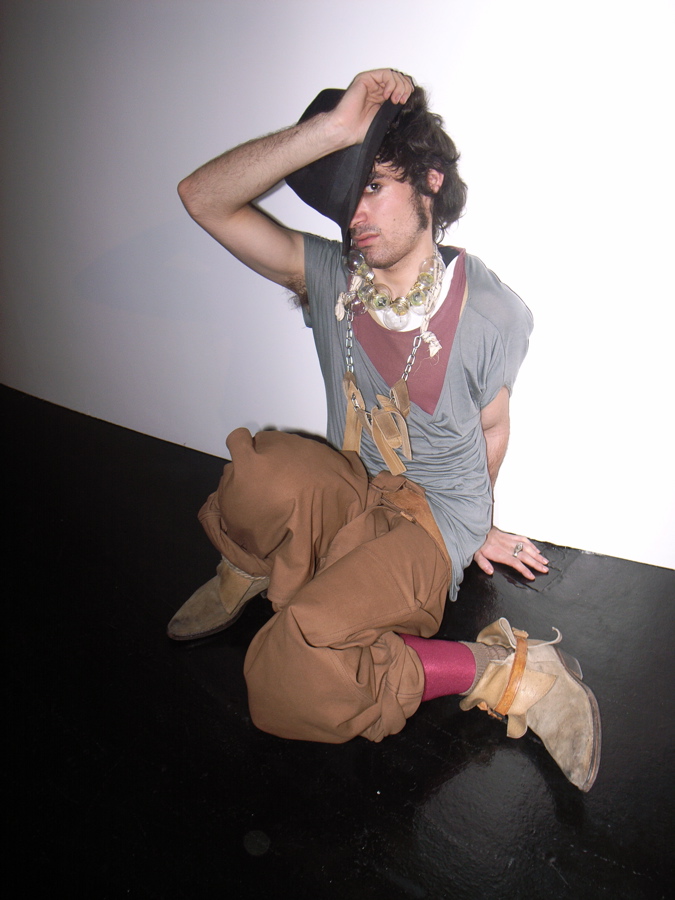
PARIS - opening of autoportraits de mode, le bon march� + opening of wu yong, galerie joyce, 02/28/07


PARIS - pret-�-porter fw 07/08 shows: dries van noten, bassin du trocad�ro + christian lacroix, jardin des tuileries, 02/28/07


Goolsbee on the Superrich

In today's NY Times, economist Austan Goolsbee asks what motivates the superrich.

Oddly, Austan's calculations assume a return on assets of 10 percent. Can one really achieve a 10 percent return after accounting for inflation and taxes? It seems high to me, if we are thinking about a balanced portfolio of stocks and bonds. At a more modest return, say 4 percent, providing for heirs is a somewhat more plausible motive than Austan gives it credit for being. Remember that the number of heirs is approximately doubling every generation--a rate of about 3 percent per year. So consumption smoothing among you and your heirs would allow you to annuitize your wealth at a rate of only 1 percent. And if you want your family's consumption to grow over time, the annuitization rate would be even lower.
 
Copyright 2010 Cake News. All rights reserved.
Themes by Ex Templates Blogger Templates l Home Recordings l Studio Rekaman